Running costs
Ford Fiesta running costs: what UK ownership really costs
Ford Fiesta UK running costs: fuel or electric, insurance group, road tax, servicing and depreciation.
Updated 4th September 2026 DVSA data: Across 1,348,184 recorded MOT tests, 27.2% failed.
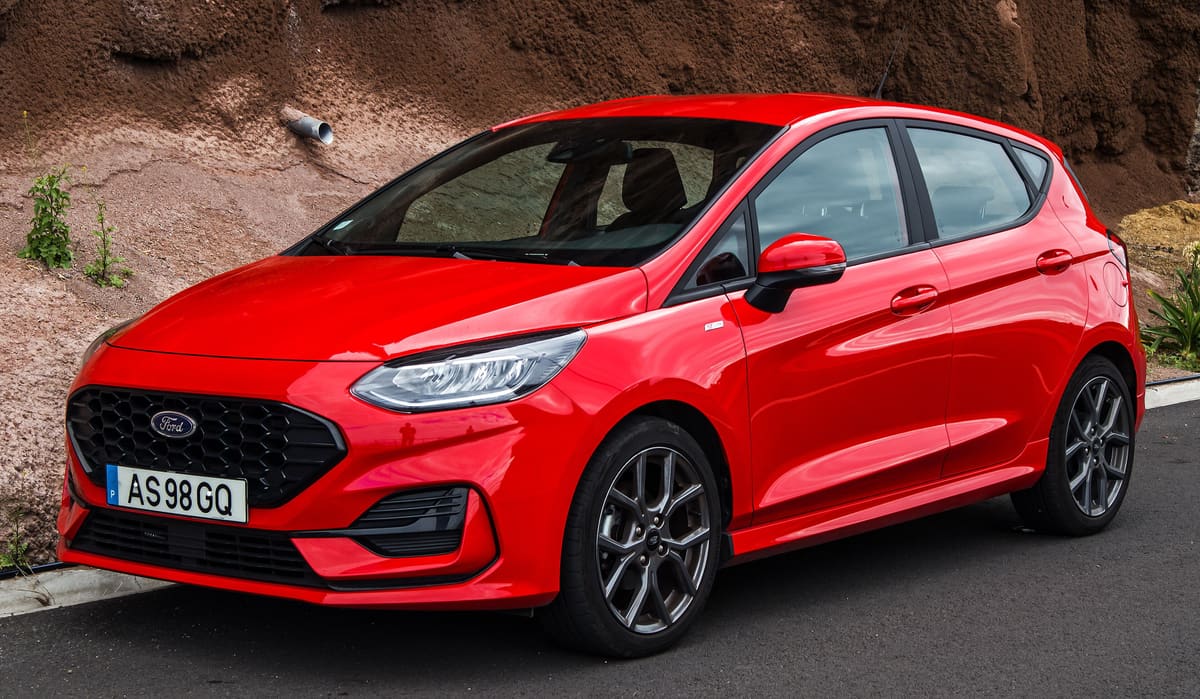
The Ford Fiesta is known for its affordability and efficiency, making it a popular choice among UK drivers. Running costs are generally low, with competitive fuel consumption, reasonable insurance premiums, and manageable servicing expenses. Overall, the total ownership cost remains attractive for both new and used buyers.
Fuel Costs
The Ford Fiesta offers a range of engines that cater to different driving needs, with fuel efficiency being a key selling point. This makes the Fiesta an economical choice for daily commuting and longer journeys alike.
Regularly checking tyre pressure and maintaining the vehicle can further enhance fuel efficiency, ensuring that running costs remain low.
Insurance Group
Insurance costs for the Ford Fiesta are generally competitive, with most models falling into insurance groups ranging from 1 to 16. This broad range means that buyers can find a model that suits their budget, whether they are looking for a basic model or a higher-spec variant with more features.
Young drivers may find that the lower insurance groups offer more affordable premiums, making the Fiesta an appealing option for first-time car owners. Additionally, the availability of advanced safety features in newer models can help reduce insurance costs further, as insurers often reward safer vehicles with lower rates.
Tax Band
The Ford Fiesta is available in various tax bands, primarily determined by the engine size and emissions. Many models fall into the lower tax bands, which means that annual road tax can be quite affordable. For example, models with CO2 emissions below 100 g/km may qualify for tax exemptions or reduced rates, making them even more cost-effective.
It is essential for potential buyers to check the specific emissions figures for the model they are considering, as this will directly impact the tax band and overall running costs. Choosing a more environmentally friendly engine can lead to significant savings over time.
Servicing Intervals
Servicing intervals for the Ford Fiesta are typically every 12 months or 12,500 miles, whichever comes first. This regular maintenance schedule helps ensure that the vehicle remains in good condition and can prevent costly repairs down the line.
Servicing costs can vary depending on the garage and the specific work required, but many owners find that the Fiesta’s parts are reasonably priced. Additionally, some independent garages offer competitive rates for servicing, allowing owners to save money while keeping their vehicles well-maintained.
Typical Depreciation
Depreciation is an important factor to consider when assessing total ownership costs. The Ford Fiesta tends to hold its value relatively well compared to other small cars, with typical depreciation rates of around 15-20% per year for the first few years.
This means that when it comes time to sell or trade in, owners can expect a reasonable return on their investment. Factors such as mileage, condition, and service history will also play a significant role in determining the resale value, so maintaining the vehicle can help mitigate depreciation.
Conclusion
Overall, the Ford Fiesta stands out for its low running costs, making it a practical choice for many drivers in the UK. With competitive fuel efficiency, affordable insurance, reasonable tax rates, manageable servicing intervals, and decent resale values, the Fiesta is a sensible option for those looking to minimise their total ownership costs.
Ford Fiesta recall record
31 recalls have been issued for the Ford Fiesta, between 1995 and 2025.
CrossCar: Sync3 Rear-View Camera Software Update
R/2025/359Issued 8 September 2025
On affected vehicles a software problem may result in issues with the rear-view camera that reduce the driver’s view or with it remaining on after a reversing event.
Remedy:Update the vehicle software to the latest level.
Affects cars built Mar 2019 to Mar 2019
25S10 – Puma Fiesta Courier – Fuel line chafing
R/2025/084Issued 19 March 2025
Affected vehicles may experience chafing between the fuel line support shield and the fuel line which could result in damage to the fuel line.
Remedy:Replace the fuel line support shield (bracket). Inspect the fuel lines and rework if necessary.
Affects cars built Dec 2021 to Jul 2023
X-Car Powertain Control Module (PCM) Software Update
R/2025/094Issued 19 December 2024
Affected vehicles may develop a crack in the Diesel Particulate Filter (DPF).
Remedy:Update software to prevent a cracked DPF. Test and replace DPFs that are already cracked.
Affects cars built May 2015 to Aug 2015
On the affected vehicles an incorrect Instrument Cluster has been fitted. This results in the speedometer not correctly displaying the maximum vehicle speed.
R/2023/274Issued 27 September 2023
On the affected vehicles an incorrect Instrument Cluster has been fitted. This results in the speedometer not correctly displaying the maximum vehicle speed.�
Remedy:Affected vehicles will have the instrument cluster exchanged.��
Affects cars built Aug 2022 to Jun 2023
27 older recalls not shown.
A recall applies to a build range, not to every car of this model. Check a registration to see whether one specific vehicle has an outstanding recall.
Ford Fiesta MOT record
From 1,348,184 recorded MOT tests, 27.2% failed.
| Registered | Tests | Failed | Median mileage |
|---|---|---|---|
| 2023 | 1,345 | 5.7% | 16,150 mi |
| 2022 | 24,943 | 6.5% | 17,729 mi |
| 2021 | 27,110 | 7.2% | 25,685 mi |
| 2020 | 48,945 | 10.2% | 31,352 mi |
| 2019 | 76,833 | 11.6% | 37,531 mi |
| 2018 | 91,591 | 12.9% | 44,905 mi |
| 2017 | 88,466 | 19.2% | 50,210 mi |
| 2016 | 111,783 | 24.6% | 57,498 mi |
Most common reasons for failure
- Tyre tread depth not in accordance with the requirements28.1%
- A suspension pin, bush or joint excessively worn24.5%
- A tyre seriously damaged20.2%
- A spring or spring component fractured or seriously weakened17.5%
- Stop lamp missing, inoperative or in the case of a multiple light source more than 1/2 not functioning9.7%
Figures cover every Ford Fiesta tested in the DVSA dataset, not this specific car. Check a registration for the actual history of one vehicle.
Frequently asked questions
What is the road tax band for a 2018 Ford Fiesta?
The 2018 Ford Fiesta falls into various tax bands depending on the engine. For instance, the 1.1-litre petrol engine is in tax band C, which means a lower annual road tax cost, making it more economical for owners.
What are the insurance costs like for a Ford Fiesta?
Insurance costs for a Ford Fiesta can vary significantly based on the model and your driving history. Generally, the Fiesta sits in lower insurance groups, with many models falling between groups 1 to 10, making it a budget-friendly option.
Sources
- DVSA anonymised MOT tests and results (Open Government Licence v3.0)
- DVSA vehicle safety recalls (Open Government Licence v3.0)