Running costs
DS DS 3 Crossback running costs: what UK ownership really costs
DS DS 3 Crossback UK running costs: fuel or electric, insurance group, road tax, servicing and depreciation.
Updated 4th September 2026 DVSA data: Across 2,257 recorded MOT tests, 14.1% failed.
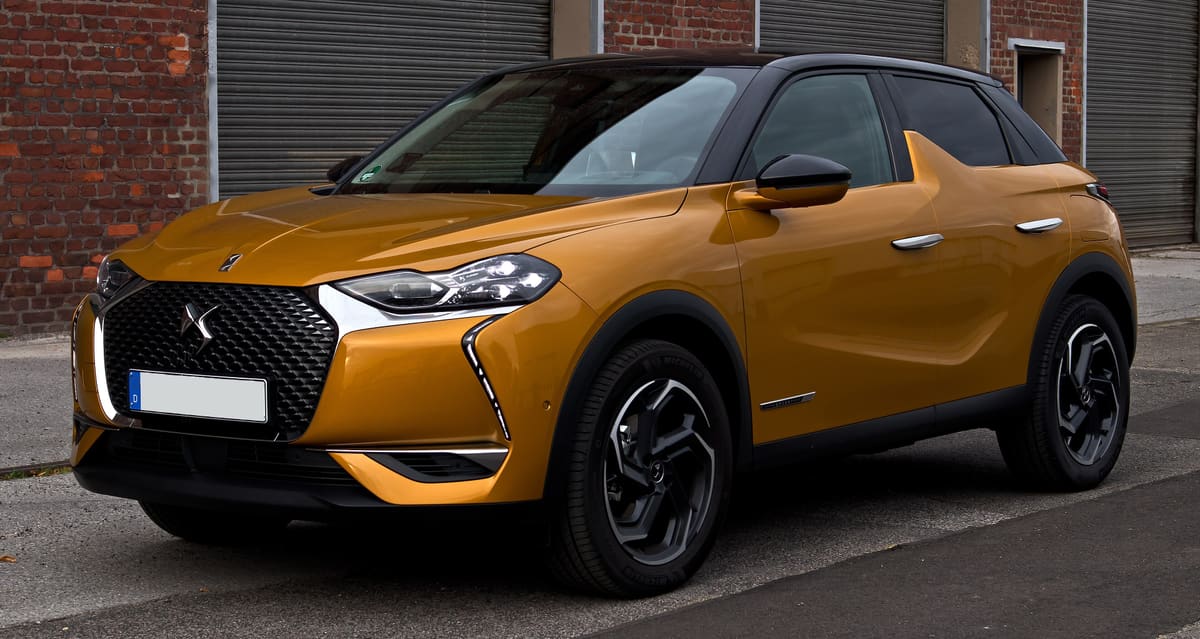
The DS 3 Crossback offers competitive running costs for both petrol and electric models. Fuel efficiency varies by engine type, while insurance groups and tax bands are reasonable. Servicing intervals are manageable, and depreciation is typical for its class, making it a practical choice for many UK drivers.
Fuel and Electric Costs
The DS 3 Crossback is available with both petrol and electric powertrains, providing flexibility in running costs. Home charging can be economical, especially with off-peak rates, while public charging may incur higher costs.
Electric owners should consider the cost of installing a home charging point, which can vary significantly, but many find it a worthwhile investment for long-term savings.
Insurance Group
Insurance for the DS 3 Crossback is generally affordable, with most models falling into insurance groups 15 to 22. This range means that premiums are competitive compared to similar vehicles in the supermini and small SUV categories. Factors such as the driver’s age, location, and driving history will influence individual insurance costs.
Choosing a model with advanced safety features may also help lower insurance premiums, as these can reduce the risk of accidents and theft. It’s advisable to shop around for quotes, as different insurers may offer varying rates for the same model.
Tax Band
The DS 3 Crossback’s tax band depends on the engine type and emissions. The electric E-Tense model is exempt from road tax, providing significant savings for eco-conscious drivers.
Understanding the tax implications is crucial for budgeting ownership costs. Additionally, the government offers incentives for electric vehicles, which can further reduce the overall financial burden of owning an E-Tense model.
Servicing Intervals
Servicing intervals for the DS 3 Crossback are set at 12,000 miles or annually, whichever comes first. This schedule is in line with many manufacturers, making it manageable for most drivers. Regular servicing is essential to maintain the vehicle’s performance and reliability, and it can help identify potential issues before they become costly repairs.
Costs for servicing can vary based on the garage and the specific work required. It’s advisable to keep up with the manufacturer’s recommended service schedule to ensure warranty coverage and optimal vehicle health.
Typical Depreciation
Depreciation for the DS 3 Crossback is in line with the small SUV market, with values typically dropping by around 40-50% after three years. Factors influencing depreciation include mileage, condition, and market demand. Electric models may experience different depreciation rates due to the growing popularity of EVs and government incentives.
When considering ownership, it’s important to factor in potential resale value. Keeping the vehicle well-maintained and within reasonable mileage can help mitigate depreciation losses, making it a more financially sound investment over time.
DS DS 3 Crossback recall record
13 recalls have been issued for the DS DS 3 Crossback, between 2023 and 2026.
BCM software missing telltale if LKA unavailable
R/2026/185Issued 27 April 2026
On affected vehicles the Lane Keep Assist tell-tale fails to illuminate if the front camera is blocked meaning no warning light appears in the instrument cluster.
Remedy:Update the Body Control Module software.
Affects cars built Mar 2024 to Apr 2025
Alternator protection
R/2026/102Issued 9 March 2026
Affected vehicles may have been assembled with contact or with a reduced clearance between the Gasoline Particulate Filter pipe and the pole protection cap of the 48V Belt Starter Generator. There is a possibility of contact between these components leading to water infiltration and an electrical arch which could trigger a thermal event.
Remedy:Replace the pole protection cap of the 48V Belt Starter Generator. Check the distance between the Gasoline Particulate Filter pipe and the pole protection cap of the 48V Belt Starter Generator and re‑position or replace the pipe if required.
Affects cars built Feb 2024 to Jan 2026
DS Automobiles DS3 Crossback ESC software
R/2025/454Issued 22 October 2025
Affected vehicles may have incorrect or missing tyre pressure messages displayed in the instrument cluster due to a software deviation.
Remedy:Update the Electric Stability Control calibration to ensure the correct tyre pressure warning messages are displayed
Affects cars built Jan 2025 to Jul 2025
Emission recall – On Board Diagnostics
R/2025/347Issued 18 August 2025
Vehicles may be affected by incorrect performance of the On-Board-Diagnostics related to Selective Catalytic Reduction system and/or Diesel Particle Filter. The Malfunction Indicator Light (MIL) may not illuminate in the event of a malfunction and therefore does not comply with emission regulations.
Remedy:Update the Engine Control Unit software to ensure compliance to regulations.
Affects cars built Jun 2018 to Dec 2020
9 older recalls not shown.
A recall applies to a build range, not to every car of this model. Check a registration to see whether one specific vehicle has an outstanding recall.
DS DS 3 Crossback MOT record
From 2,257 recorded MOT tests, 14.1% failed.
| Registered | Tests | Failed | Median mileage |
|---|---|---|---|
| 2022 | 1,118 | 10.5% | 19,975 mi |
| 2021 | 736 | 17.5% | 26,438 mi |
| 2020 | 403 | 17.4% | 31,451 mi |
Most common reasons for failure
- Tyre tread depth not in accordance with the requirements31.6%
- Wiper blade missing or obviously not clearing the windscreen20.0%
- A tyre seriously damaged18.4%
- A suspension joint dust cover missing or no longer prevents the ingress of dirt etc17.2%
- Brake disc or drum excessively weakened, insecure or fractured12.8%
Figures cover every DS DS 3 Crossback tested in the DVSA dataset, not this specific car. Check a registration for the actual history of one vehicle.
Frequently asked questions
How reliable is the DS 3 Crossback in terms of running costs?
The DS 3 Crossback is generally considered reliable, with many owners reporting minimal issues in the first few years. However, electrical components like the infotainment system can occasionally cause problems, leading to potential repair costs.
How does the warranty affect running costs for a DS 3 Crossback?
The DS 3 Crossback comes with a three-year warranty, which can help mitigate running costs during that period. This warranty covers most mechanical issues, but wear-and-tear items like tyres and brake pads are not included.
Sources
- DVSA anonymised MOT tests and results (Open Government Licence v3.0)
- DVSA vehicle safety recalls (Open Government Licence v3.0)