Running costs
Dacia Jogger running costs: what UK ownership really costs
Dacia Jogger UK running costs: fuel or electric, insurance group, road tax, servicing and depreciation.
Updated 4th September 2026 DVSA data: Across 3,041 recorded MOT tests, 13.1% failed.
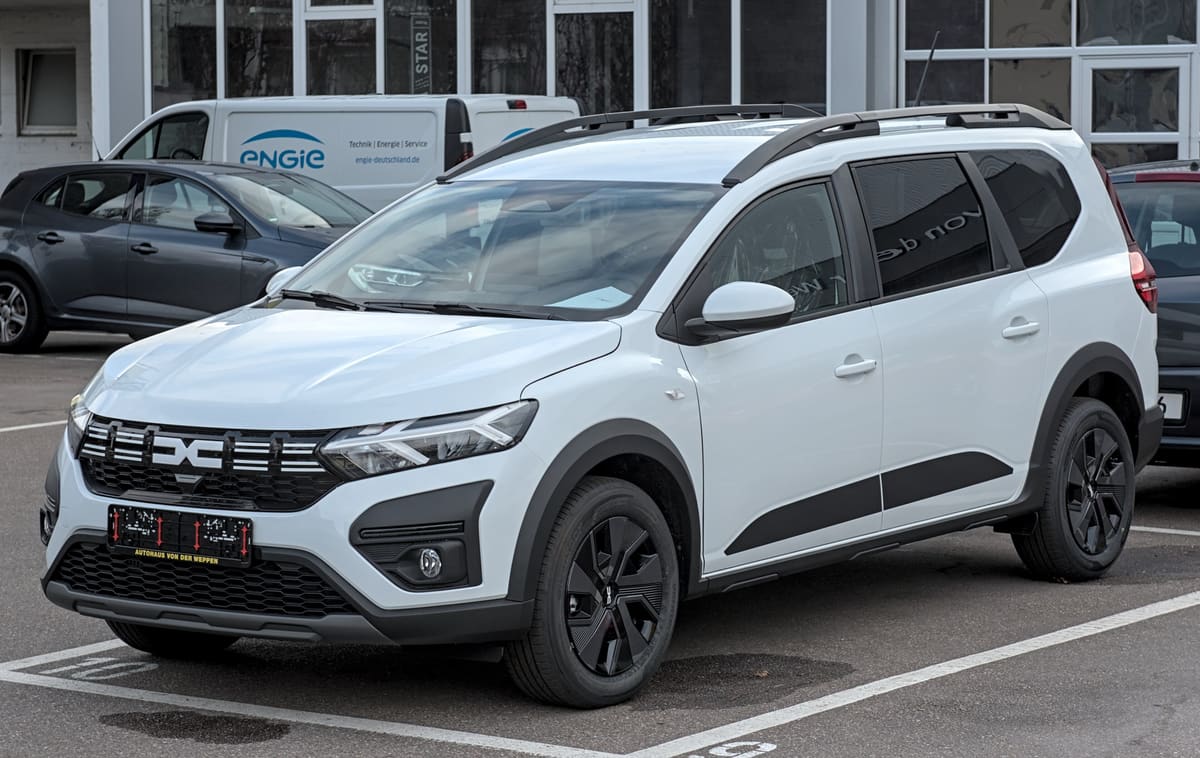
The Dacia Jogger offers an appealing ownership cost profile, making it a budget-friendly choice for families. With competitive fuel efficiency, low insurance costs, reasonable tax bands, and affordable servicing, it stands out as an economical option. Typical depreciation rates are also favourable, ensuring it retains value well over time.
Fuel Costs
The Dacia Jogger is available with both petrol and hybrid powertrains, providing flexibility in fuel choice. The petrol variant typically achieves around 40-50 miles per gallon, depending on driving conditions and style. The hybrid model offers even better efficiency, often exceeding 60 miles per gallon, making it an economical choice for both city and long-distance driving.
Fuel costs will vary based on local petrol prices, but with the Jogger’s efficiency, owners can expect to spend less on fuel compared to many rivals in the same segment. Regular maintenance, such as ensuring tyre pressures are optimal and the engine is well-tuned, can further enhance fuel economy, reducing overall running costs.
Insurance Group
The Dacia Jogger falls into a low insurance group, which is a significant advantage for budget-conscious buyers. Depending on the specific model and trim level, insurance groups can range from 10 to 15. This means that premiums are generally lower than average for family cars, making it a cost-effective option for those looking to minimise insurance expenses.
When selecting a vehicle, it is essential to consider insurance costs, especially for younger or less experienced drivers. The Jogger’s low insurance group helps keep overall ownership costs down, making it an attractive choice for families and first-time buyers alike.
Tax Band
The Dacia Jogger is classified within the lower tax bands, which contributes to its affordability. The exact tax band depends on the engine choice, with the petrol models typically falling into Band D or E, while the hybrid variants may be even lower. This means that annual road tax costs are minimal compared to many other vehicles in the same category.
Being in a lower tax band not only reduces the immediate financial burden but also enhances the vehicle’s appeal for long-term ownership. Lower tax costs can significantly impact total ownership expenses, making the Jogger an economical choice for families who want to keep running costs manageable.
Servicing Intervals
Dacia recommends servicing the Jogger every 12 months or 12,000 miles, whichever comes first. This interval is competitive compared to many other manufacturers and helps keep maintenance costs predictable. Regular servicing ensures that the vehicle remains in good condition, which can prevent costly repairs down the line.
Dacia vehicles are known for their reliability, and sticking to the recommended servicing schedule can help maintain this reputation. Owners should also consider the cost of parts and labour, which are generally lower for Dacia compared to premium brands, further enhancing the affordability of ownership.
Typical Depreciation
Depreciation is an important factor to consider when assessing total ownership costs. The Dacia Jogger typically experiences slower depreciation than many competitors, retaining a good proportion of its value after three to five years. This is partly due to its affordability and strong reputation for reliability.
When purchasing a new vehicle, understanding depreciation can help buyers make informed decisions. The Jogger’s ability to hold its value well means that owners can expect a reasonable return if they decide to sell or trade it in after a few years, making it a financially savvy choice.
Conclusion
Overall, the Dacia Jogger presents a compelling case for those looking for a family vehicle with low running costs. With its efficient fuel consumption, low insurance group, minimal tax obligations, reasonable servicing intervals, and strong depreciation performance, it stands out as an excellent choice for budget-conscious buyers. As families continue to seek value in their vehicle purchases, the Jogger’s cost-effective ownership profile will likely remain a key selling point.
Dacia Jogger recall record
1 recall has been issued for the Dacia Jogger, in 2025.
Rear stub axle carrier mounting bolts
R/2025/001Issued 6 February 2025
On affected vehicles due to an insufficient tightening of the rear stub axle carrier mounting bolts at the factory the fatigue resistance of the bolt assembly is reduced.
Remedy:Replace the rear stub axle carrier mounting bolts and tightening them at the correct torque.
Affects cars built Mar 2024 to Oct 2024
A recall applies to a build range, not to every car of this model. Check a registration to see whether one specific vehicle has an outstanding recall.
Dacia Jogger MOT record
From 3,041 recorded MOT tests, 13.1% failed.
| Registered | Tests | Failed | Median mileage |
|---|---|---|---|
| 2023 | 406 | 6.7% | 24,250 mi |
| 2022 | 2,635 | 14.1% | 25,407 mi |
Most common reasons for failure
- Tyre tread depth not in accordance with the requirements32.1%
- A tyre cords visible or damaged26.0%
- A tyre seriously damaged16.1%
- a brake lining or pad worn below 1.5mm14.0%
- Wiper blade missing or obviously not clearing the windscreen11.8%
Figures cover every Dacia Jogger tested in the DVSA dataset, not this specific car. Check a registration for the actual history of one vehicle.
Dacia Jogger official figures
Median across 40 variants on sale, petrol, petrol electric.
- Combined economy
- 48.7 mpg
- WLTP median across variants
- CO2 emissions
- 131 g/km
- Sets the first-year tax rate
Official figures for new cars. Real economy varies with driving, load and conditions.
Frequently asked questions
How often does the Dacia Jogger need servicing?
The Dacia Jogger requires a service every 12 months or 12,000 miles, whichever comes first. Regular maintenance includes oil changes, air filter replacements, and brake inspections to ensure optimal performance and longevity.
What is the insurance group for the Dacia Jogger?
Insurance groups for the Dacia Jogger vary by model, typically ranging from group 10 to 14. This means that the cost of insurance can be relatively affordable compared to other vehicles in its class, making it a budget-friendly option.
Are there any specific parts that are expensive to replace?
Replacing the Dacia Jogger's timing belt can be a significant cost, especially if it fails. It's recommended to check the timing belt interval, which is usually around 60,000 miles, to avoid potential engine damage.
How reliable is the Dacia Jogger?
The Dacia Jogger has shown good reliability ratings, with few reports of major issues. Regular checks on components like the brakes and suspension can help maintain its dependability over time.
What are the common wear and tear items for the Dacia Jogger?
Tyres and brake pads are common wear and tear items for the Dacia Jogger. Depending on driving style and conditions, you may need to replace tyres every 20,000 to 30,000 miles, while brake pads typically last around 30,000 to 50,000 miles.
What warranty does the Dacia Jogger come with?
The Dacia Jogger comes with a three-year or 60,000-mile warranty, whichever comes first. This warranty covers most components, providing peace of mind for new buyers regarding potential repair costs.
Sources
- DVSA anonymised MOT tests and results (Open Government Licence v3.0)
- VCA new car fuel consumption and emissions data (Open Government Licence v3.0)
- DVSA vehicle safety recalls (Open Government Licence v3.0)