MOT failure rates
Audi e-tron MOT failure rates: what to expect
What fails on an Audi e-tron at MOT, how often, and what each fix typically costs.
Updated 4th September 2026 DVSA data: Across 18,912 recorded MOT tests, 8.8% failed.
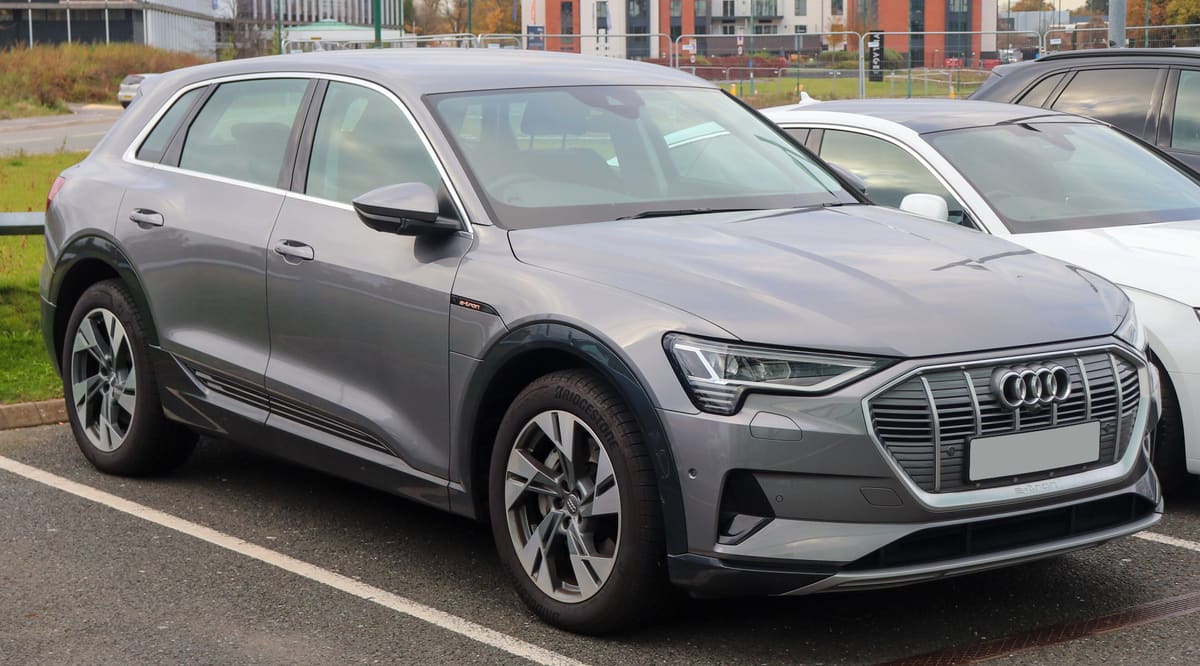
The Audi e-tron is a premium electric SUV that has gained popularity for its performance and luxury. Common problems include issues with lights, brakes, and tyres, with repair costs varying based on the specific fault.
Lighting Issues
One of the most frequent causes of MOT failure for the Audi e-tron is lighting problems. This includes issues with headlights, brake lights, and indicators not functioning correctly. The DVSA MOT data indicates that lighting failures are among the top reasons for MOT rejections.
Fixing lighting issues typically involves replacing bulbs or repairing wiring. Regular checks of all lights before the MOT can help avoid these common failures.
Brake System Failures
Another significant area where the Audi e-tron may fail its MOT is the braking system. Problems can arise from worn brake pads, damaged discs, or issues with the brake fluid. The braking system is crucial for safety, and any faults will lead to an automatic failure.
Regular maintenance and checks of the braking system can help ensure it remains in good condition.
Tyre Condition
Tyres are critical for vehicle safety and performance, and they are a common reason for MOT failures in the Audi e-tron. Issues such as insufficient tread depth, uneven wear, or damage can lead to rejection. The legal minimum tread depth in the UK is 1.6mm, and anything below this will fail the MOT.
Regularly checking tyre pressure and tread depth can help prevent unexpected costs and ensure safety on the road.
Suspension Problems
Suspension issues are another area where the Audi e-tron may face MOT failures. Problems with shock absorbers or springs can lead to poor handling and increased stopping distances.
Regular inspections can help identify issues early, preventing more significant problems down the line.
Emissions and Exhaust System
While the Audi e-tron is an electric vehicle and does not have a traditional exhaust system, it is still subject to checks for other emissions-related components. Any faults in the battery management system or cooling systems can lead to MOT failures.
Keeping up with software updates and routine maintenance can help mitigate potential failures related to emissions.
Windscreen and Wipers
Windscreen issues, including chips and cracks, as well as faulty wipers, are common reasons for MOT failures. A windscreen chip larger than 10mm in the driver’s line of sight will lead to an automatic failure. Wiper blades that do not clear the screen effectively can also cause problems.
Regularly inspecting the windscreen and wipers can help ensure they are in good condition before the MOT.
Audi e-tron recall record
18 recalls have been issued for the Audi e-tron, between 2019 and 2025.
Checking air spring strut
R/2025/237Issued 2 July 2025
A retaining ring may not be securely seated in the area of the support mounting on the air spring struts on your vehicle. If the retaining ring comes loose from its groove air will escape from the affected air spring strut. This directly impairs the vehicle’s driving dynamics and results in an increased accident risk
Remedy:Check the affected air spring struts and replace them if necessary.
Affects cars built Mar 2025 to Mar 2025
Check high-voltage battery
R/2024/436Issued 8 November 2024
Some individual modules of the high-voltage battery may display technical irregularities. It cannot be ruled out that the battery may overheat under certain circumstances. For safety reasons affected cell modules must be replaced during a workshop visit. Vehicles affected by this should also not be charged above 80% until further notice.
Remedy:The high-voltage battery must be checked on the affected vehicles and if necessary one or more modules must be replaced.
Affects cars built Feb 2021 to Jun 2023
Replace battery module
R/2024/404Issued 16 October 2024
Some individual cell modules of the high-voltage battery may display technical irregularities. It cannot be ruled out that the battery may overheat under certain circumstances with risk of fire and damage to persons or property.
Remedy:Vehicles affected by this should also not be charged above 80% until further notice. Affected cell modules must be replaced during a workshop visit. The corresponding battery module must be replaced on the vehicles affected.
Affects cars built Mar 2021 to Jun 2023
Replacing brake hoses
R/2024/322Issued 30 September 2024
On affected vehicles cracks may occur on the brake hoses on the front axle over time resulting in brake fluid escaping.
Remedy:Replace the front axle brake hoses.
Affects cars built Jan 2020 to Jun 2024
14 older recalls not shown.
A recall applies to a build range, not to every car of this model. Check a registration to see whether one specific vehicle has an outstanding recall.
Audi e-tron MOT record
From 18,912 recorded MOT tests, 8.8% failed.
| Registered | Tests | Failed | Median mileage |
|---|---|---|---|
| 2022 | 5,798 | 9.4% | 27,926 mi |
| 2021 | 6,978 | 8.2% | 37,134 mi |
| 2020 | 5,134 | 8.6% | 42,427 mi |
| 2019 | 1,002 | 10.4% | 48,912 mi |
Most common reasons for failure
- Tyre tread depth not in accordance with the requirements47.7%
- A tyre seriously damaged28.5%
- A tyre cords visible or damaged16.0%
- Defect 100014.0%
- Brake disc or drum excessively weakened, insecure or fractured3.8%
Figures cover every Audi e-tron tested in the DVSA dataset, not this specific car. Check a registration for the actual history of one vehicle.
Audi e-tron official figures
Median across 4 variants on sale, electricity.
- Electric range
- 341 miles
- Manufacturer WLTP figure
Official figures for new cars. Real economy varies with driving, load and conditions.
Frequently asked questions
What is the Audi e-tron mot?
The Audi e-tron mot refers to the electric vehicle's maintenance and operational testing. It ensures that the vehicle meets safety and environmental standards.
How often do I need to get my Audi e-tron mot?
In the UK, electric vehicles like the Audi e-tron require an MOT test every 12 months once they are three years old. It's important to keep up with this to ensure your vehicle is roadworthy.
What does the Audi e-tron mot test include?
The MOT test for the Audi e-tron includes checks on safety features, emissions, and overall vehicle condition. It ensures that all essential components are functioning properly.
Can I drive my Audi e-tron if the mot has expired?
No, you cannot legally drive your Audi e-tron if the MOT has expired. You must have a valid MOT certificate to operate the vehicle on public roads.
Where can I get an Audi e-tron mot done?
You can get an Audi e-tron MOT done at any authorised testing centre or garage that offers MOT services. It's best to choose one that has experience with electric vehicles.
What should I do if my Audi e-tron fails the mot?
If your Audi e-tron fails the MOT, you will receive a list of issues that need to be addressed. You must fix these problems and have the vehicle retested before you can drive it legally.
Are there any special considerations for the Audi e-tron during the mot?
Yes, while the Audi e-tron is an electric vehicle, it still undergoes the same MOT checks as traditional cars. However, specific components like the battery and electric systems may require additional attention.
How can I prepare my Audi e-tron for the mot?
To prepare your Audi e-tron for the MOT, ensure that all lights are working, tyres are in good condition, and the battery is charged. Regular maintenance checks can also help identify potential issues before the test.
Sources
- DVSA anonymised MOT tests and results (Open Government Licence v3.0)
- VCA new car fuel consumption and emissions data (Open Government Licence v3.0)
- DVSA vehicle safety recalls (Open Government Licence v3.0)