Running costs
Audi A7 running costs: what UK ownership really costs
Audi A7 UK running costs: fuel or electric, insurance group, road tax, servicing and depreciation.
Updated 4th September 2026 DVSA data: Across 16,630 recorded MOT tests, 13.4% failed.
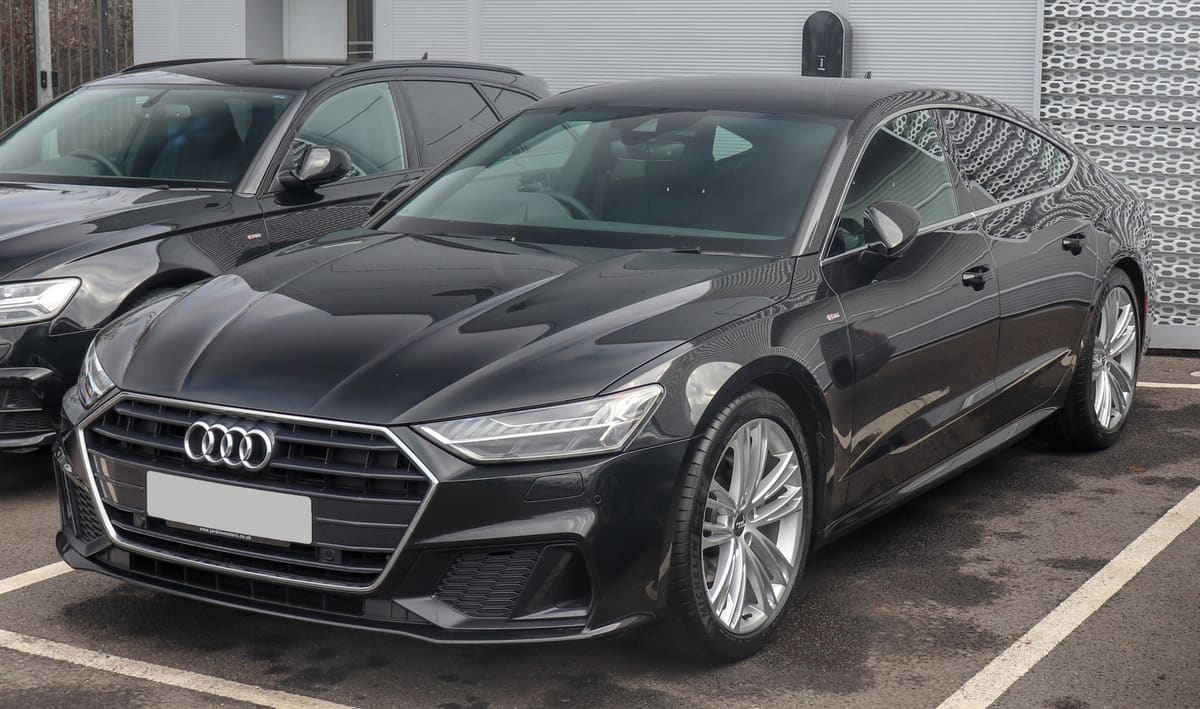
The Audi A7 is a premium vehicle with varying running costs depending on the model and engine choice. Servicing intervals are typically every 12 months or 10,000 miles, and depreciation is around 50% after three years.
Fuel Costs
Fuel costs for the Audi A7 can vary significantly based on the engine type and driving habits.
Diesel models may offer lower fuel costs over time, but initial purchase prices are usually higher.
Insurance Group
The insurance group for the Audi A7 varies widely, typically ranging from 36 to 50, depending on the specific model and engine size. Higher performance models, such as the S7 or RS7, fall into the upper end of this scale, resulting in higher premiums.
When considering insurance, it is essential to shop around as premiums can differ significantly between providers. Factors such as your driving history, location, and even your age can influence the final cost. It’s advisable to use comparison sites to find the best deal for your circumstances.
Road Tax
The Audi A7’s road tax falls into various bands, primarily D to H, depending on the engine type and CO2 emissions. For example, petrol engines typically incur higher tax rates than their diesel counterparts due to higher emissions.
The introduction of low-emission and hybrid models has provided more cost-effective options for those looking to minimise their tax liability while still enjoying the luxury of an Audi.
Servicing Intervals
Servicing intervals for the Audi A7 are generally set at 12 months or 10,000 miles, whichever comes first. Regular maintenance is crucial for keeping the vehicle in optimal condition and maintaining its resale value.
Audi recommends using authorised service centres for maintenance to ensure that genuine parts are used. While this may be more expensive than independent garages, it can provide peace of mind regarding the quality of service and parts. Regular servicing can also help identify potential issues early, preventing costly repairs down the line.
Depreciation
Depreciation is a significant factor to consider when purchasing an Audi A7. On average, you can expect the vehicle to lose around 50% of its value after three years. This is typical for luxury vehicles, as they tend to depreciate faster than mainstream brands.
Factors that can influence depreciation include mileage, condition, and service history. A well-maintained vehicle with a full service history will generally hold its value better than one that has been neglected. Additionally, limited edition models or those with desirable features may depreciate at a slower rate.
Overall Ownership Costs
When considering the overall ownership costs of an Audi A7, it is essential to factor in fuel, insurance, road tax, servicing, and depreciation.
While the Audi A7 is undoubtedly a premium vehicle with associated costs, many owners find the driving experience and luxury features justify the expense. It is advisable to budget for these costs when considering purchasing an A7, as they can significantly impact the overall ownership experience.
Audi A7 recall record
14 recalls have been issued for the Audi A7, between 2014 and 2025.
Software update for battery control unit
R/2025/463Issued 24 October 2025
On affected vehicles there may be defective battery modules which may result in a fire hazard when charging the high-voltage battery.
Remedy:Update the software of the high-voltage battery to improve the self-diagnosis capabilities. Vehicle owners are advised to not charge the high-voltage battery using external charging sources and also not use the e-tron modes “Battery charge” and “Battery hold” until the update is applied.
Affects cars built Dec 2021 to Jun 2024
On certain vehicles an incorrect bracket for the side airbag was fitted in the left front seat.
R/2023/317Issued 27 October 2023
On certain vehicles an incorrect bracket for the side airbag was fitted in the left front seat.
Remedy:Replace the side airbag and bracket.
Affects cars built Jul 2023 to Jul 2023
The fuel gauge may not show the drop in fuel level correctly during vehicle operation
R/2023/027Issued 20 January 2023
The fuel gauge may not show the drop in fuel level correctly during vehicle operation.
Remedy:The tank level sender must be replaced on the affected vehicles.
Affects cars built Apr 2018 to Oct 2021
ENGINE CONTROL UNITS MIGHT BE FITTED WITH SEMICONDUCTOR COMPONENTS THAT DO NOT MEET SPECIFICATIONS
R/2022/169Issued 10 June 2022
On a small number of vehicles manufactured within a specific period it is possible that the engine control units were fitted with semiconductor components which do not meet the specifications.
Remedy:The engine control unit must be replaced on the affected vehicles.
Affects cars built Jan 2022 to Feb 2022
10 older recalls not shown.
A recall applies to a build range, not to every car of this model. Check a registration to see whether one specific vehicle has an outstanding recall.
Audi A7 MOT record
From 16,630 recorded MOT tests, 13.4% failed.
| Registered | Tests | Failed | Median mileage |
|---|---|---|---|
| 2022 | 429 | 9.1% | 29,440 mi |
| 2021 | 642 | 9.8% | 38,684 mi |
| 2020 | 618 | 9.1% | 43,280 mi |
| 2019 | 1,422 | 9.8% | 56,564 mi |
| 2018 | 1,368 | 10.5% | 63,004 mi |
| 2017 | 1,620 | 11.5% | 71,690 mi |
| 2016 | 2,307 | 14.0% | 79,955 mi |
| 2015 | 1,972 | 12.9% | 88,184 mi |
Most common reasons for failure
- Tyre tread depth not in accordance with the requirements38.0%
- A tyre seriously damaged23.3%
- A suspension pin, bush or joint excessively worn20.7%
- a brake lining or pad worn below 1.5mm9.6%
- A tyre cords visible or damaged8.3%
Figures cover every Audi A7 tested in the DVSA dataset, not this specific car. Check a registration for the actual history of one vehicle.
Audi A7 official figures
Median across 5 variants on sale, diesel electric, electricity / petrol, petrol electric.
- Combined economy
- 40.9 mpg
- WLTP median across variants
- CO2 emissions
- 169.5 g/km
- Sets the first-year tax rate
Official figures for new cars. Real economy varies with driving, load and conditions.
Frequently asked questions
What are the average fuel costs for an Audi A7?
The fuel costs for an Audi A7 can vary depending on the engine type and driving habits. Generally, you can expect to spend more on fuel compared to smaller vehicles, especially if you opt for a more powerful engine.
How much does insurance typically cost for an Audi A7?
Insurance costs for an Audi A7 can be higher than average due to its luxury status. The exact premium will depend on factors like your driving history, location, and the specific model of the A7.
What are the maintenance costs associated with an Audi A7?
Maintenance costs for an Audi A7 can be significant, as luxury vehicles often require specialised parts and services. Regular servicing is essential to keep the car in good condition and can add to the overall running costs.
Are there any common issues that affect running costs for the Audi A7?
Common issues can include electrical problems and wear on components like brakes and tyres. Addressing these issues promptly can help manage running costs effectively.
How does the Audi A7's depreciation affect its running costs?
The Audi A7 tends to depreciate at a moderate rate, which can impact its resale value. Understanding depreciation can help you assess the long-term running costs of owning the vehicle.
What are the road tax costs for an Audi A7?
Road tax for an Audi A7 varies based on the engine size and emissions. It's important to check the specific model to determine the exact tax band and associated costs.
How does the Audi A7's warranty affect running costs?
The Audi A7 typically comes with a warranty that covers certain repairs and services for a specified period. This can help reduce running costs during the warranty period, but be aware of what is covered.
What should I budget for tyres on an Audi A7?
Tyre costs for an Audi A7 can be higher than average due to its size and performance requirements. It's advisable to budget for premium tyres to ensure safety and performance.
Sources
- DVSA anonymised MOT tests and results (Open Government Licence v3.0)
- VCA new car fuel consumption and emissions data (Open Government Licence v3.0)
- DVSA vehicle safety recalls (Open Government Licence v3.0)